Pigeon Bay Boating Club's future safeguarded by Christchurch City Council accommodation decision

One of New Zealand's most remote yacht clubs is celebrating a major step forward in its years-long campaign to secure accommodation it considers critical to its future.
A Christchurch City Council community board has recommended a solution that would preserve annual camping sites for Pigeon Bay Boating Club members and help safeguard its ability to continue delivering sailing activity in the harbour.
The decision follows more than two years of uncertainty over the future of annual sites at the nearby Pigeon Bay Campground, which club leaders warned could threaten the long-term viability of the volunteer-run organisation and its sailing programme.
The process also drew a strong public response, with hundreds of submissions received, including support from Yachting New Zealand as part of the wider consultation.
Pigeon Bay Boating Club commodore Zach Hitchcock welcomed the decision.
"We are really happy with the outcome," Hitchcock said. "This is an issue that has been weighing on the yacht club for a number of years now, so it’s great that we have got to a favourable outcome and can move forward knowing there is an accommodation option to support the running of the club by members."
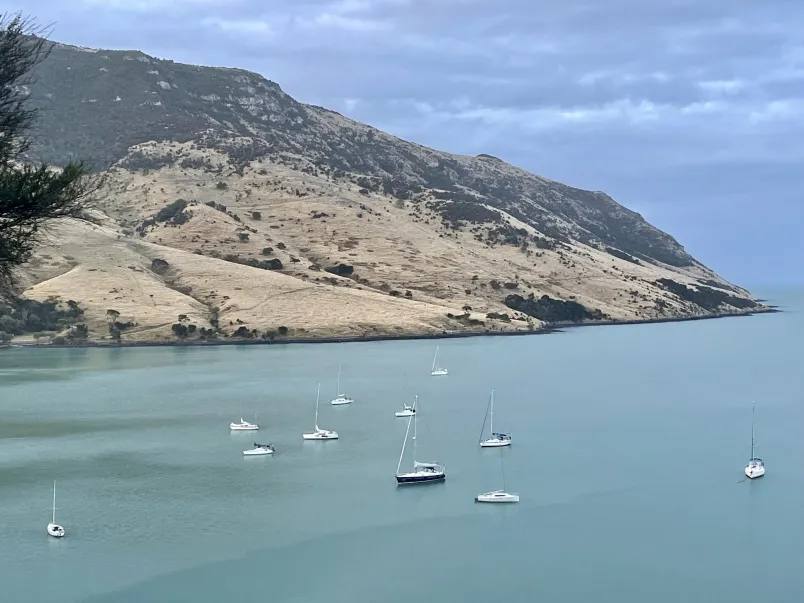
Pigeon Bay Boating Club is located about 80 minutes from Christchurch and relies heavily on volunteers travelling from across Canterbury. Photo / Pigeon Bay Boating Club
The issue first emerged in 2024 when Te Pātaka o Rākaihautū Banks Peninsula Community Board asked council staff to review long-standing use of annual camping sites at Pigeon Bay Campground and Duvauchelle Holiday Park, amid concerns the arrangements may not comply with section 44 of the Reserves Act 1977, which limits long-term occupation of recreation reserves without ministerial consent.
For the club, however, the sites are more than holiday accommodation. Located about 80 minutes from Christchurch, it relies heavily on volunteers travelling from across Canterbury to run racing programmes, maintain facilities, crew rescue boats and host regattas.
Its sailing calendar runs from September to April, with racing roughly every second weekend, alongside South Island and Canterbury championships and traveller series events.
"To be able to provide our sailing programme, along with the general maintenance and running of the club, it requires people to be able to stay in Pigeon Bay rather than drive back and forth from Christchurch," Hitchcock said. "There is limited accommodation in Pigeon Bay, so the campground is critical for providing accommodation for the members of the club who spend so much time keeping the club running."
Following public consultation, the community board in April voted to recommend that annual sites remain at Pigeon Bay under a modified arrangement. The proposal, which still requires final approval from the council’s chief executive, would see existing annual sites expire 10 years after approval, with eight sites reserved specifically for active Pigeon Bay Boating Club members. Remaining sites would gradually transition to a public ballot system as they become available.
"This effectively means that long-term, we will always have eight sites allocated to members of PBBC,” Hitchcock said.
The recommendation came despite a council staff report favouring operational changes to improve compliance with the Reserves Act. However, community feedback strongly supported retaining annual sites, with 176 submissions received. Of these, 64 per cent backed continuation, compared with 15 per cent supporting full compliance measures that would have removed long-term occupation arrangements.
"We were surprised by the level of support," Hitchcock said. "It was nice that we had strong support from residents of Pigeon Bay also."

Eight sites at the Pigeon Bay Campground (pictured) will be reserved for yacht club members. Photo / Supplied
Throughout the process, the club received support from Yachting New Zealand, which helped shape its response and submission.
Hitchcock credited regional development managers Jenny Armstrong and Ingrid Harder with guiding the club through what was, at times, a complex process for a volunteer-run organisation.
"Jenny and Ingrid provided support and advice on how we should approach our submission. Many yacht clubs around New Zealand are facing similar issues that impact their viability, so they were able to draw on that broader experience," Hitchcock said.
Yachting New Zealand chief executive Steve Armitage also provided a letter of support included in the submission.
"This helped articulate clearly what was at stake if the decision went against us, and the impact it would have on organised sailing at Pigeon Bay," Hitchcock said.
Armitage said community-based clubs such as Pigeon Bay are central to the sport's future.
"Pigeon Bay Boating Club plays an important role in strengthening community participation and maintaining access to recreational waters," he said. "As a volunteer-led organisation, it relies on members’ ability to stay locally, and the availability of annual sites provides essential accommodation in an area with limited alternatives, enabling that ongoing commitment.
"Without these camping sites, the club’s ability to operate and remain sustainable would be significantly affected, with impacts on its sailing programme, regional events and wider contribution to the Canterbury sailing community."
Related news
It’s been an action-packed month for our NZCT regional development managers around the country, with Yachting New Zealand’s ongoing membership model and affiliation fee structure review roadshow keeping the team busy.
New legislation requiring everyone on recreational craft of six metres or less to wear a properly fitted lifejacket while underway will be in place ahead of the peak summer boating season.
In the first episode of Yarns with Yachties, a new collaborative series from Yachting New Zealand and Live Sail Die, we caught up with Andrew McFarlane at the Nautilus Braids factory in Rolleston, just outside Christchurch.