2026 Solo Trans-Tasman Challenge: Stricken New Plymouth Yacht Club sailor Graeme Francis recounts flooding ordeal, credits preparation for safe return

When water started pouring into his yacht in the raging Tasman Sea, Graeme Francis found himself confronting the scenario every offshore sailor hopes never arrives.
A day from land and hours from help, in darkness, heavy seas and gusts exceeding 50 knots, the veteran yachtsman was battling unexplained flooding, a failing engine and lost communications alone aboard his beloved Robbery.
The 36-foot monohull began taking on water on Sunday afternoon, just under 24 hours after Francis and 14 other competitors set off in this year’s Solo Trans-Tasman Challenge — a gruelling 1,200-mile single-handed voyage from Ōpua in the Bay of Islands to Southport, Australia.
Exhausted after hours of manual pumping and unable to trace the source of the ingress, Francis began to consider abandoning the vessel.
"At one stage I thought, 'this is getting a little bit real now,'" he said. "I got the life raft ready to deploy if I had to. My God, they're not light. I also had all my emergency supplies and grab-bag ready, and I was thinking about how I'd have to get the life raft over the side and get into it if it came to that. It wasn't going to be a pleasant job."
The 69-year-old New Plymouth Yacht Club sailor — a veteran of more than 19,000 offshore miles and a four-decade association with the race — activated his emergency position-indicating radio beacon (EPIRB) and notified race control that he was turning back.
"I've done a few miles at sea, and when you've done a bit of sailing, you're mentally prepared for what could happen," Francis said. "In the seven months of preparation for this race, I'd played out thousands of scenarios of things that could go wrong and how I would respond, but taking on that much water wasn't one of them.
"I wasn't scared, but I was certainly concerned. My main worry was where the water was coming from and what was going to happen next."
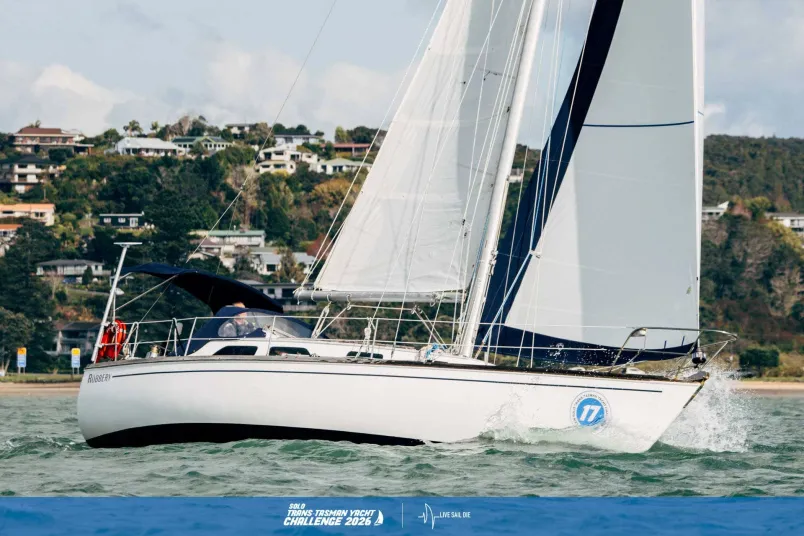
Graeme Francis aboard Robbery at the start of the 2026 Solo Trans-Tasman Challenge. Photo / Suellen Hurling, Live Sail Die
The problems began as darkness fell, some 30 miles north of the Three Kings Islands.
"I noticed something wasn't right, so I went around checking all the skin fittings, and they were fine, but the water kept coming in," Francis said. "I was pumping away with the manual bilge pump and at the same time tried to start the motor, but it wouldn't go. The water alarm came on, and there was water in the diesel."
To make matters worse, he could not maintain contact with the Coastguard on VHF.
"Everything just kept failing," he said. "A mate tracking me said he couldn't see me on AIS anymore and told me to check whether the aerial was still on top of the mast. I looked up, and the VHF aerial was gone. That explained why Coastguard couldn't hear me. I could hear them intermittently on the way back towards New Zealand, but they couldn't hear me at all."
Still, he did not panic.
"It wouldn't make any difference. There's no one there to help you — you've got to work through it yourself. I was just working through things systematically in my mind."
A commercial tanker sent to assist arrived about 11pm, but in the severe weather conditions, it was too unsafe for Francis to leave his vessel.
"The ship was about 100 metres away and offered to take me off the boat, but I thought it was too dangerous. The seas were quite large, and the wind was strong. They wanted me to motor over so they could throw me a line and take me off," he said. "In those conditions, I don't think it would have been very safe at all."
Conditions were also too severe for any aircraft to be deployed, and after hours of pumping, fatigue eventually caught up with the retired carpenter.
"I was so tired I lay down and had about 30 minutes' sleep," he said. "When I woke up, the water level had hardly increased at all. I thought, 'OK, whatever's happened isn't getting any worse'."
Eventually, Francis traced the source of the flooding.
"I was dropping off some pretty big waves earlier, and the anchor smashed through the side of the fibreglass in the anchor well. It was tied in and locked off, but it still managed to punch through the fibreglass, which allowed water from the anchor well into the boat," he said.
"Once I turned back towards New Zealand, the wind and sea were more behind me, so I wasn't getting as much water breaking over the bow. The anchor well was draining better, and less water was coming in. My manual pumping was enough to stop the water level from rising any further. After a few hours, the level actually started decreasing, which was fantastic."
Sixteen hours after raising the alarm, Robbery was still afloat, and Francis was nearing the coast after sailing more than 180km home under his own steam.
He reached Mangōnui around 9am on Monday, with Coastguard Houhora escorting the yacht into harbour alongside Mangōnui Cruising Club volunteers, following coordination with Maritime NZ and other support vessels.
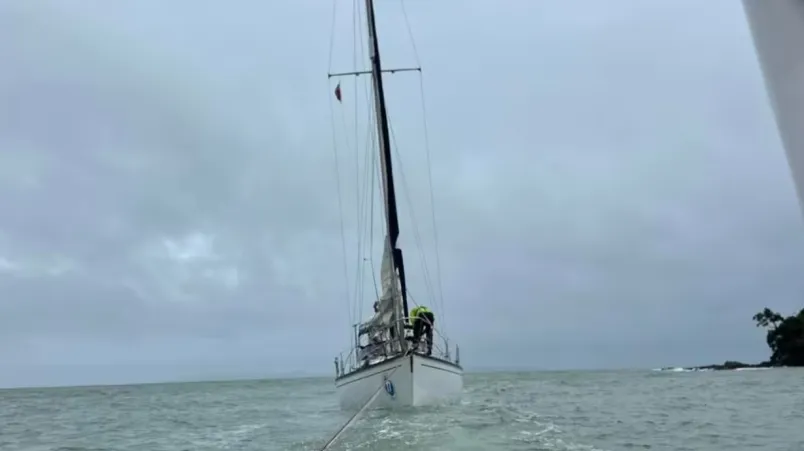
Robbery being escorted back to Mangōnui. Photo / Coastguard NZ
Maritime NZ search-and-rescue officer Anthony Ivan said Francis' preparedness — including backup pumps, a liferaft, lifejackets, EPIRBs and satellite communication devices — combined with his decision-making under pressure, likely saved his life.
"He has prepared himself for every eventuality, and in doing so, he’s taken the, I won’t say the miracle component out of it, but he has done everything right, and that is the moral to take from this particular story,” Ivan told RNZ.
It's a lesson every sailor should take to sea, Francis believes.
"Preparation is everything," he said. "If you're getting ready for an offshore voyage and looking at your to-do list thinking, 'That doesn't matter, I'll get away without that,' then you're only fooling yourself."
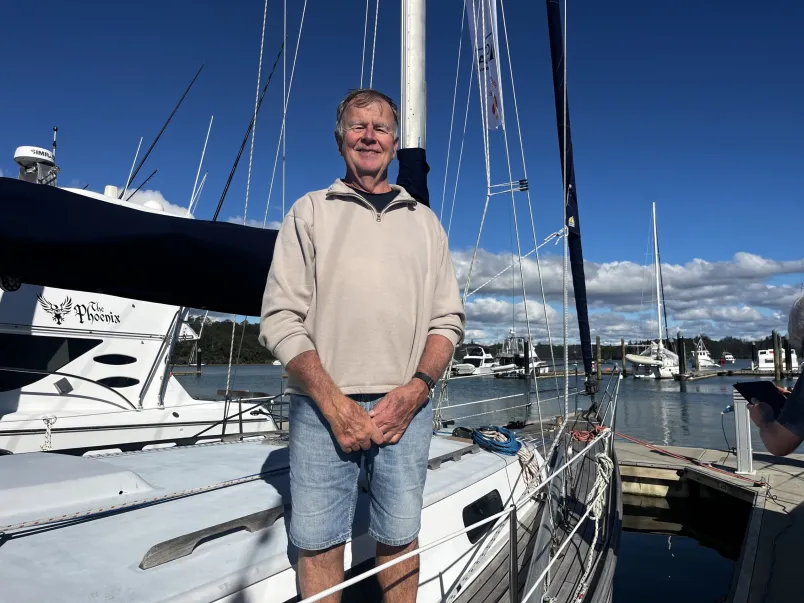
Graeme Francis says preparation is key for all sailors heading offshore. Photo / Kirsten Thomas, Boating NZ
Yachting New Zealand regional development and safety manager and experienced offshore sailor, Nigel Richards, echoed the message, saying that outcomes at sea are often decided long before the start line.
“While offshore racing will always carry risk, preparation, training, and seamanship often determine how incidents unfold when things go wrong."
Offshore sailors are required to work through a layered safety system, including Category 1 yacht inspections, mandatory equipment standards and formal training such as offshore personal safety and sea survival courses, Richards said.
"What we're trying to ensure is that when sailors go offshore, they've not only got the right equipment, but they understand how to use it under pressure and fatigue, and how quickly situations can change at sea.
"Incidents like this underline that preparation is not theoretical; it is what allows people to manage real emergencies when they occur."
As of Friday afternoon, two other race starters had also retired from the 2026 Solo Trans-Tasman Challenge — Bill Kidman on Pretty Boy Floyd, and Glen Jeffery on Wave — with race leader Guy Chester on Ocean's Tribute expected to reach Southport late on Friday (NZ time).
Francis singled out fellow competitor Doug Esterman aboard Fair Seasons, who turned back after his distress call to stand by if assistance was needed.
"Doug was fantastic. He was about 35 or 40 miles away and turned around to see if he could help. That was really nice of him. Once he knew I was continuing towards New Zealand and wasn't sinking, he turned back to racing.
"That's all part of being involved in the sea. Everyone helps everyone else."
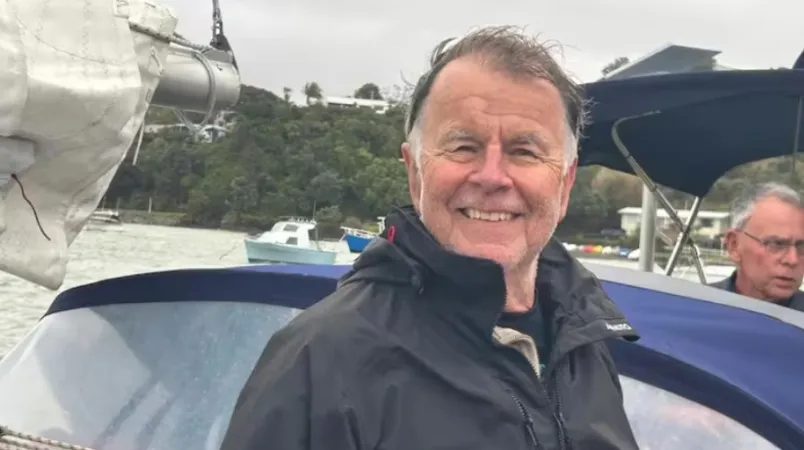
The veteran sailor experienced water ingress, motor failure and lost communications. Photo / Paul Francis
The experience reinforced the value of the extensive preparation required before sailors are allowed to start a race such as the Solo Trans-Tasman, Francis said.
"It takes months and months to get everything ready. You've got to get the boat to Category 1 standard, get an International Voyage Certificate (issued by Maritime NZ), organise insurance, re-rig the mast, buy new sails, new electronics, and a new liferaft. You've also got to do an offshore medical, advanced sea survival courses and a whole lot more. It's quite amazing, really," he said.
"A lot of people in the race say the hardest part is actually getting to the start line because there's so much to do — but I'm glad I ticked all those boxes. It's not a case of just jumping in your boat and going for a sail — you need backup systems for your backup systems.
"The ocean is unforgiving, and help might be three or four days away — not half an hour away."
Francis doubts he will return for another Solo Trans-Tasman in 2029.
"I've done the race twice now and got away with it this time," he laughed.
"I think my single-handed offshore sailing days are over. But then again, I've said that before."
Click here to follow Boating NZ's extensive coverage of all the action from the 2026 Solo Trans-Tasman Challenge.
Related news
It’s been an action-packed month for our NZCT regional development managers around the country, with Yachting New Zealand’s ongoing membership model and affiliation fee structure review roadshow keeping the team busy.
New legislation requiring everyone on recreational craft of six metres or less to wear a properly fitted lifejacket while underway will be in place ahead of the peak summer boating season.
In the first episode of Yarns with Yachties, a new collaborative series from Yachting New Zealand and Live Sail Die, we caught up with Andrew McFarlane at the Nautilus Braids factory in Rolleston, just outside Christchurch.