Inside Paulien Chamberlain’s groundbreaking career in blind and Para sailing

Wherever she sails, Paulien Chamberlain is making history – even without being able to see the racecourse.
A four-time blind world champion under her maiden name, Paulien Eitjes, the 51-year-old now races single-handed against fully sighted sailors, with only a little assistance.
That includes revolutionary audio buoys she and her husband, Richard, are developing – not just to help Chamberlain navigate a course, but to make it easier for other sailors with disabilities.
The couple tested eight of the buoys at last year’s Hansa world championships in Sydney, where Paulien – the reigning national Hansa 303 single champion – believes she was the first vision-impaired sailor to compete in the single-handed fleet.
It was a confronting experience for Chamberlain, who has less than 10 per cent vision.
“I really struggle with the starts, and the Sydney fleet was bigger and busier than anything I’ve ever experienced. So I hung back and stayed out of the way,” she says. “I had no idea where I was in the fleet rounding a mark.”
But in her final race, she made a smart decision – sitting back and starting on port tack, while the others were on starboard – and finished fourth.
“I was absolutely fizzing,” she says. Chamberlain finished the regatta as the fifth women’s Para sailor, and 30th overall in a fleet of 75. It’s made her hungry for more.
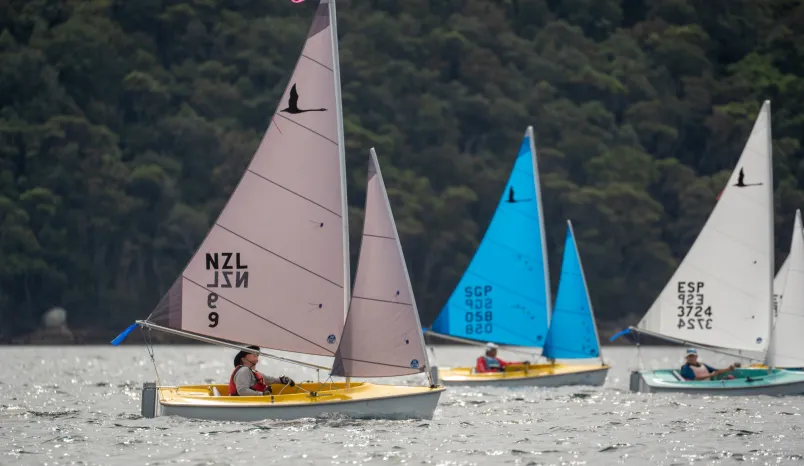
Paulien Chamberlain created history in 2009 as the first blind sailor to compete with sighted opposition. Photos / Supplied
Chamberlain has a rare form of blindness – juvenile heredomacular dystrophy – that first emerged in childhood. She describes it like the coat of her late Dalmatian guide dog: “Lots of blind spots everywhere, and what’s left is significantly fuzzy and out of focus.”
Legally blind, Chamberlain thrives sailing in regular fleets, especially at her local yacht club in Tauranga – but faces her fair share of challenges.
“I can’t find my way around the course on my own, but I still use my residual sight when boats meet – if they’re getting bigger, I know they’re coming towards me,” she laughs.
“But I can’t see what they’re doing – if they have their mainsheet pulled in tighter than mine, if they have more heel on the boat, or they’re pointing higher than me.
“I really have to sail the boat where I am. It may look like I’m making really dumb tactical decisions, but when I encounter a busy area of the course, I’ll have the right of way, and all I have to do is holler to avoid a collision.”
She enjoys sailing in heavier winds when her boat-handling skills come into play, but she struggles on lighter days.
“There’s nothing for me to feel, and I can’t see puffs on the water,” she says. “But I was taught to be a thinking sailor.”
Chamberlain, who works from home as a medical transcriptionist for Health NZ, met Richard not through sailing but through sequence dancing – a blend of ballroom and folk dancing. Back then, Richard was a weekend sailor, but his future wife taught him to race.
“We’re pretty much on a par now, but he has to sail his heart out to beat me,” she says. (For the record, he finished one place ahead of her at last year’s Hansa worlds).
They own an armada of different boats, sailing together for leisure on their Davidson 20 Campbell Bay. But Richard has made a huge contribution to his wife’s sailing career through his work developing audio buoys.
The buoys emit a 10-second sequence of beeps as Chamberlain nears a mark. Working in his large Tauranga shed, retired electrician Richard is refining their design to make them more stable and less cumbersome.
“I have a dream of being able to pop them in my suitcase and take them to any regatta in the world,” Chamberlain says. “Maybe I could have a symbol on my sail that indicates I’m vision impaired and allows me to use the audio buoys.”
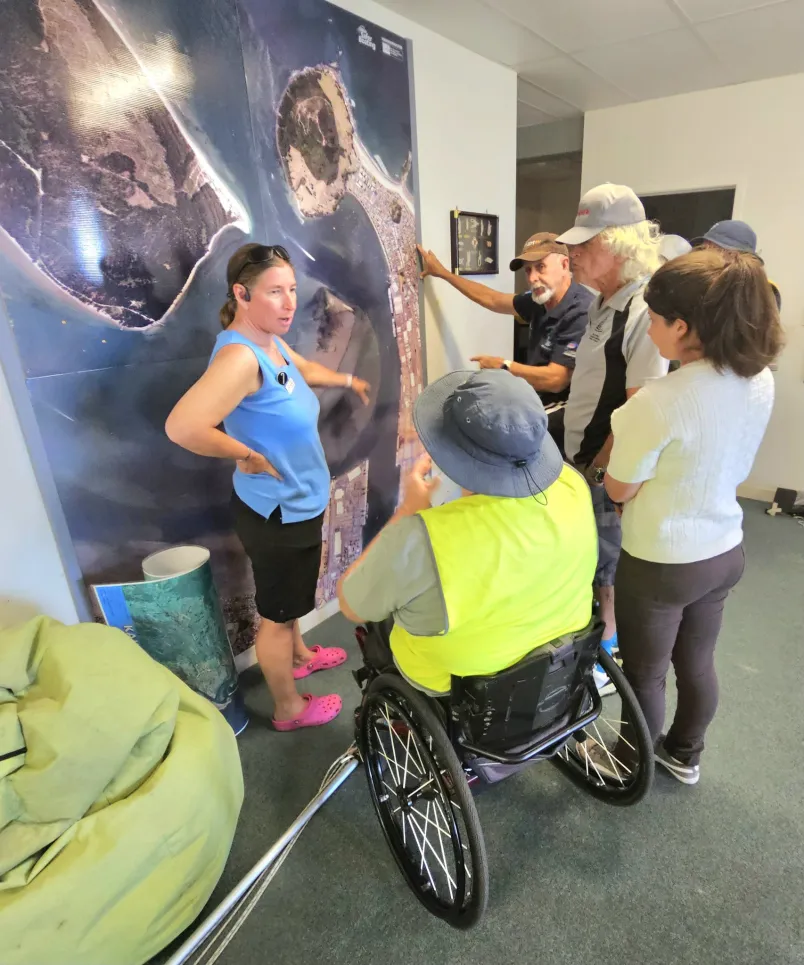
Chamberlain is a long-time member of the Tauranga Yacht and Powerboat Club. Photos / Supplied
Chamberlain began losing her sight at age 9, and it continues to deteriorate.
Highly sensitive to light, you’ll always see her in sunglasses outdoors. She grew up with a sailing dad, who had a trailer sailer in the Bay of Islands.
“But we weren’t allowed to touch or do anything,” she says.
It wasn’t until 1998, in her early 20s, that she learned to sail. A horse almost threw her off course. When the Tauranga Blind and Vision Impaired Sailing Club approached her to join its sailing school, she was riding on weekend mornings (a dressage rider, she represented New Zealand in blind equestrian events across the Tasman). Chamberlain couldn’t imagine fitting in both sports. But the sailing club told her to skip the morning ‘knots and theory’ sessions and come along in the afternoons.
“It was great. I wasn’t hooked straight away, but they told me I had a talent for helming,” she recalls.
Sailing soon took priority when Chamberlain realised her horse was “way too talented” for her.
She’s never regretted the switch.
When the blind sailing club disbanded, Chamberlain was able to sail keelboats through the Women on Water programme at the Tauranga Yacht and Powerboat Club.
The only drawback Chamberlain encountered was telling her crewmates about her lack of sight.
“Sometimes, you just prefer to be the same as everyone else,” she says. “But in saying that, I haven’t had many people hold that against me.”
Former TYPBC commodore Gary Smith has been one of Chamberlain’s biggest supporters – and was her sighted tactician when she helmed to two blind fleet-racing world titles.
When she helmed Smith’s Elliot 10.5, Sniper, in Wednesday night racing on the harbour, he often put a hand on her shoulder: “A sign for me not to listen to anything he was about to say,” she says. “Then he would holler, ‘Go up, go up – you’re gonna crash!’ to the other crew. At the end of the night’s racing, he’d say to anyone new on the boat, ‘Do you realise Paulien’s blind?’ And they were like, ‘What? Really?’ “I wouldn’t be where I am now without Gary, and all the others who’ve helped and supported me.”
Chamberlain won the national blind sailing championships four times, the blind matchracing world titles in 2007 and 2008, and the blind fleet racing world champs in 2006 and 2009, in the B2 division (less than 10 per cent vision). Determined to try her hand at the tiller of a dinghy, she borrowed a Topaz – with not so much success.
“I cartwheeled and damaged it, then thought I should probably have a boat of my own,” she recalls. So she bought a Starling, lining up in club races with the likes of Molly Meech, Peter Burling and Tom Saunders.
“I was an adult, but I was a bit lighter then,” she says. “I loved the independence of being able to go out and make my own choices, my own mistakes.”
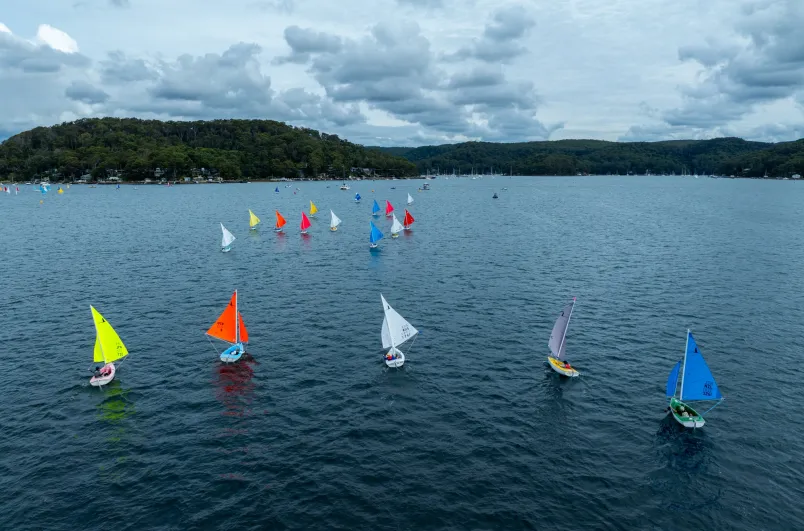
Chamberlain (second from right) at last year’s Hansa world championships in Sydney. Photos / Supplied
She remembers a club race when she capsized and a young kid circled her in his Opti until she safely clambered back into her boat (that kid was Cole Rippey, who went on to win the Tanner Cup).
Chamberlain created history in 2009 as the first blind sailor to compete with sighted opposition in the North Island P Class and Starling championships off Tauranga, sailing with a VHF radio clipped to her lifejacket to hear instructions.
“I really believe Tauranga is one of the best clubs in the world – for conditions, for culture, and for supporting each other,” she says.
In 2013, London Paralympian Tim Dempsey encouraged Chamberlain to sail a Hansa – a class which champions sailing for everyone.
“The coach would bang a pan with a wooden spoon so I could find the top mark. It was a super can-do attitude to make it happen,” she says.
And with winning results.
In her first attempt, Chamberlain took out the national Hansa 303 single title.
The next Hansa worlds are in France in 2027, and she would love another shot, but the expense and the complexity of new environments – small things like turning on hotel air conditioning – make it difficult for her.
But where there’s a will, there’s a way. Chamberlain is also a strong advocate for getting Para sailing back in the Paralympics, at Brisbane 2032, and being on the startline there.
She recently sailed in the SKUD18 international match racing challenge in Auckland, with another outstanding female skipper, Sally Garrett, as her sighted helm.
They finished fourth.
“We had women power!” she says. “It was an absolutely awesome experience… I did gennaker work, which we don’t use in blind sailing. I’d love to do it again." - By Suzanne McFadden
This article first appeared in the Autumn edition of Yachting & Boating Quarterly. For more stories like this, click here.
Related news
It’s been an action-packed month for our NZCT regional development managers around the country, with Yachting New Zealand’s ongoing membership model and affiliation fee structure review roadshow keeping the team busy.
New legislation requiring everyone on recreational craft of six metres or less to wear a properly fitted lifejacket while underway will be in place ahead of the peak summer boating season.
In the first episode of Yarns with Yachties, a new collaborative series from Yachting New Zealand and Live Sail Die, we caught up with Andrew McFarlane at the Nautilus Braids factory in Rolleston, just outside Christchurch.