Changing sailing classes: Four experts share what sailors and parents should consider

Choosing when to move into a new class can feel like a big decision for sailors and parents. There are many factors to weigh — age, growth, motivation, friendships, fleet size, budget, and future goals.
The aim is not to get it perfect, but to find the next step that keeps you learning and enjoying sailing.
We asked four sailors with different backgrounds for their advice — Sam Mackay, Yachting New Zealand’s Youth Manager; Tom Saunders, a former ILCA 7 world champion and Paris 2024 Olympian; Olympic gold medallist and Yachting New Zealand’s regional development and coaching manager Jenny Armstrong; and Tessa Clinton, who has competed at multiple Youth World Championships, winning bronze in 2025 with Amelia Higson.
How do I know when it is time to move to a new class?
Armstrong: There are many reasons for changing classes: ageing out, outgrowing the level, friends moving on to another class, wanting a new challenge, wanting to go faster, or just trying something new. Clinton: The most important thing for me is that you are having fun. If your friends have moved, it often makes sense to stay with them. If you are not the right size, it’s also worth finding a class that suits both your friends and your physical development.
Mackay: For many sailors, the natural time to consider changing class is at the end or start of a season. This gives time to plan, try boats, and talk to coaches before deciding. A common risk is staying too long in a class. If a sailor outgrows the boat, it can become frustrating and may feel like they are not improving, when in fact the boat is no longer the right fit.
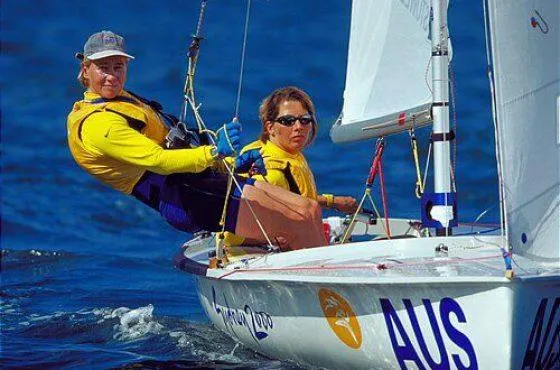
Jenny Armstrong (right) won Olympic gold in 2000. Photo / Supplied
What are the most common indicators that it is time to move on — physically, technically, or mentally?
Mackay: There are usually a few clear signs. Physically, a sailor may be outgrowing the boat or finding it harder to sail effectively, which can affect both performance and enjoyment. Technically, they may be ready for a new challenge, such as a spinnaker, trapeze, foiling, more complex controls, or a different style of fleet racing. Mentally, they may become curious about other boats or lose motivation in their current class. A useful question is: Is this boat still helping me become a better sailor? If not, it may be time to look at the next step.
Saunders: It’s important to be honest with yourself about whether you’re still learning in your current boat. If you feel like you’re no longer improving, it’s probably time to move on. As a young sailor, continuous skill development is key, and staying in the same boat too long can limit that growth.
What key questions should sailors ask themselves before choosing their next class, and who can they turn to for guidance?
Armstrong: People are always willing to help — you just need to ask. Coaches, parents, older sailors, and those already sailing the boat you’re considering can all offer advice.
Mackay: A good class choice starts with understanding what the sailor enjoys. What type of sailing excites them — speed, tactics, foiling, technical setup, teamwork, or close fleet racing? It’s also important to consider whether they want to sail single- or double-handed, and whether there is a strong local or regional fleet to train and race with regularly. Coaching support, suitability for size and growth, and budget all matter too. Above all, the key question is whether the boat will keep them motivated.
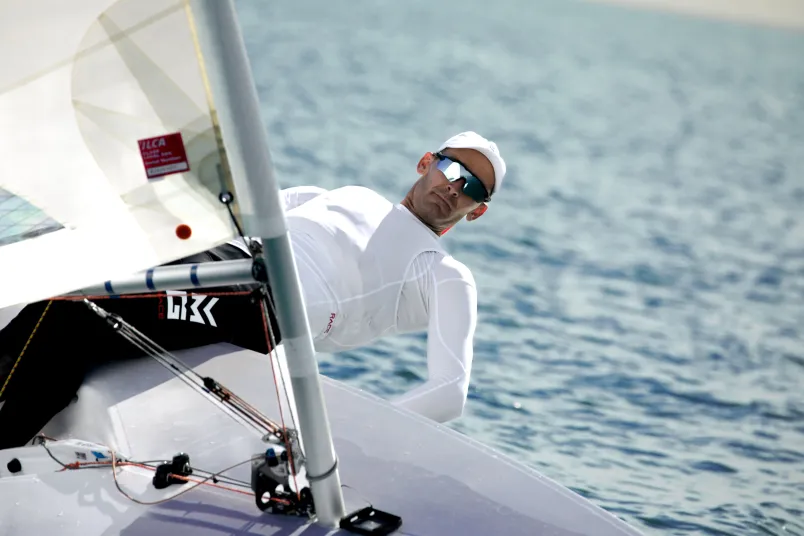
Tom Saunders won the ILCA 7 world championships in 2021 and represented New Zealand at the Paris 2024 Olympic Games. Photo / VMG Race
Sailors often stay in a class longer to win events or stay with friends. How do you balance confidence-building with long-term development?
Clinton: You don’t need to be successful early to reach long-term goals. Many top sailors started late. Each class feels important at the time, but later you realise it was one step in your development. The key is enjoying the learning, as each new class will eventually become your focus.
Saunders: There’s a fine balance, but I was usually among the first in my age group to move up rather than wait to age out. It pushed me to advance my skills, and while I didn’t always win races at first, it gave me a head start over other sailors my age and set me up well for my career. Winning is important, but if you’re unsure, it’s often better to move to the next class. Talk to people at your club or Yachting New Zealand — it’s not a decision you have to make alone.
Would you recommend trying a variety of boats before committing?
Armstrong: Yes, because how do you know what a boat is like without trying it first? Find someone at your club who can give you a go on their boat, or contact the class association or Yachting New Zealand to help connect you with someone.
Clinton: Absolutely. Trying different boats before committing is highly recommended. Most classes have sailors who are happy to help, and your club or Yachting New Zealand can connect you with opportunities to try boats.
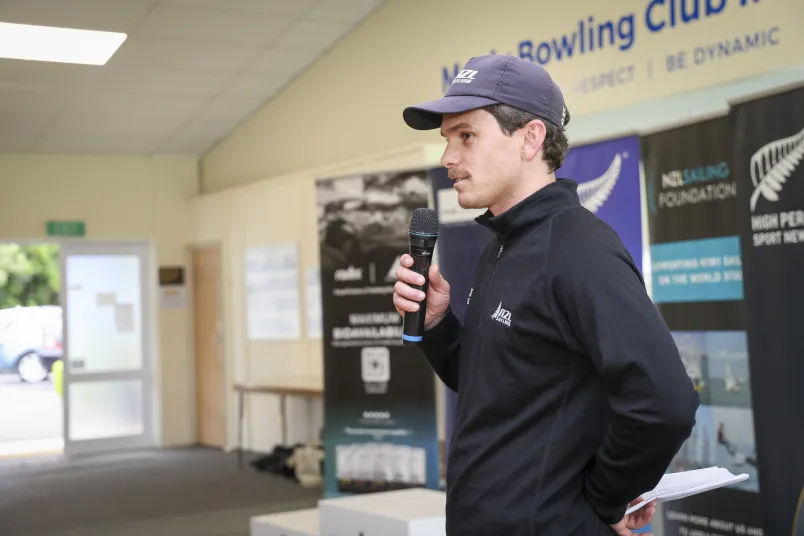
Sam Mackay is Yachting New Zealand's Youth Programme Manager. Photo / Yachting New Zealand
Do I need to think about my physical size and growth potential when deciding on moving classes?
Armstrong: Yes. If you’re interested in racing and aiming to reach the top of a class, it’s important to fit within the optimal weight and size range. However, if you love a boat and simply want to go sailing, it’s less important.
Clinton: Yes, physical size and growth should be considered. If your size means you are no longer enjoying the boat or performing well, it may be time to move on rather than stay too long.
Mackay: Size should not be the only factor, but it should be part of the decision. Staying in a class too long and becoming too big for the boat can make sailing harder and become demotivating.
What are the pros and cons of moving from single-handed to double-handed classes?
Armstrong: I’ve sailed both and think that, at its core, double-handed sailing has higher highs and lower lows. The main advantage is that you have a teammate to lean on, which also makes it a more social experience. On the other hand, there are more logistical challenges, including coordinating schedules between two sailors and often two families, and managing more variables.
Mackay: Double-handed sailing can be a fantastic development step, but the most important thing is that the sailors enjoy sailing together. A good pairing is not always the two strongest sailors on paper. Often, the best combinations are sailors who communicate well, have similar commitment levels, enjoy training together, and can work through challenges positively.
Saunders: I’d encourage young sailors to try as many things as possible early on. Some sailors thrive in a team environment and perform better with a partner. I tried it when I was younger, but I realised I preferred sailing alone — I like being the only one to blame!
When selecting a new class, how important is the strength of the local fleet?
Clinton: That depends on the sailor. Some just enjoy sailing regardless of numbers, while others prefer large, competitive fleets.
Mackay: Local fleet numbers are especially important for sailors from regional clubs. Sailing with a group is usually more enjoyable, providing regular training, frequent racing, learning from others, and social connection. A boat may look ideal on paper, but without others nearby to sail with, it can quickly feel isolating.
What role should budget and equipment considerations play?
Armstrong: Budget is always a consideration and may be a critical factor when selecting your next class. Check out your local club, as there may be options to use or rent club boats.
Mackay: Budget should be considered early and honestly. The cost of a class goes well beyond the boat, including sails, foils, spars, ropes, maintenance, insurance, coaching, travel, accommodation, entry fees, and replacement gear. Some classes also require more ongoing investment.
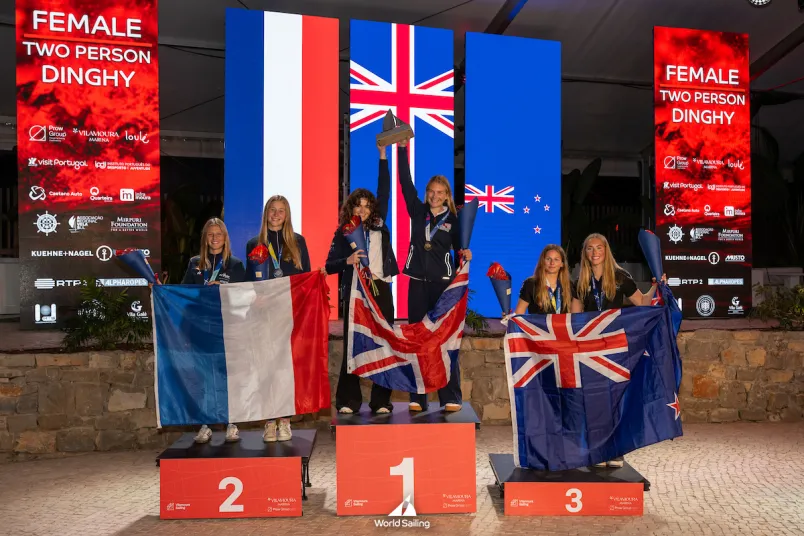
Tessa Clinton and Amelia Higson won 420 bronze at last year's Youth World Championships. Photo / World Sailing
Changing classes can be challenging while you are learning. What advice would you give to sailors and parents to manage expectations during this transition?
Armstrong: Remember that each sailor develops at different speeds. As parents, we naturally want our children to do well, but if a child quits a sport, we — and they — will never know how good they could have become.
Clinton: Talk to lots of people and seek out experienced, thoughtful sailors rather than just opinions. Once in a new class, find trusted people and listen to their advice.
Mackay: Expect the transition to take time. When sailors move into a new class, results won’t come straight away, and that’s normal. They are learning a new boat, skills, controls, physical demands, and often a different style of racing. Parents can help by keeping expectations realistic and focusing on effort, enjoyment, and small improvements. Mistakes are part of the process, so staying curious and asking questions is key.
Saunders: Patience is key. Just because you’re not performing as well as you’d like in one class doesn’t mean you won’t excel in another. Often, making a switch is when things start to click. Everyone progresses at their own pace, and it may take time before you find the class that suits you best. o do well, but if a child quits a sport, we — and they — will never know how good they could have become.
This article first appeared in the Autumn edition of Yachting & Boating Quarterly. For more stories like this, click here.
Related news
It’s been an action-packed month for our NZCT regional development managers around the country, with Yachting New Zealand’s ongoing membership model and affiliation fee structure review roadshow keeping the team busy.
New legislation requiring everyone on recreational craft of six metres or less to wear a properly fitted lifejacket while underway will be in place ahead of the peak summer boating season.
In the first episode of Yarns with Yachties, a new collaborative series from Yachting New Zealand and Live Sail Die, we caught up with Andrew McFarlane at the Nautilus Braids factory in Rolleston, just outside Christchurch.