2026 Doyle Sails Round North Island Race: How Ragnar conquered New Zealand's biggest offshore challenge

By Kathy Young
When their owner pulled out weeks before the start, Brett Elliott and James Glidden took the helm of Ragnar — and proved that consistency and grit can conquer New Zealand’s toughest offshore race.
The Round North Island Yacht Race (RNI) has been testing offshore sailors since 1977, when Sir Peter Blake, inspired by the Round Britain Race, and Martin Foster, drawing on his own New Zealand circumnavigation aboard Truant, launched the inaugural event. Forty-four boats started, with 39 finishing, and Blake and Graham Eder on Gerontius taking line honours.
The standard was set for what would become a bucket-list challenge for sailors nationwide.
This year, sponsored by Doyle Sails, 26 yachts sailed anticlockwise across four legs totalling more than 1,250 nautical miles. The two-handed race takes about two weeks, with boats ranging from eight to 15 meters and crews from hardened racers to casual cruisers. It’s this diversity that fuels tight racing for both line honours and PHRF handicap prizes.
Run by the Shorthanded Sailing Association of New Zealand (SSANZ) since 1996, the RNI has become the pinnacle of New Zealand offshore keelboat racing outside harbour regattas.
"The race is considered the pinnacle of New Zealand keelboat sailing outside of any intense harbour-based regatta," said RNI Race Director Garry Jolliffe.
Just reaching the start line is an achievement. Each yacht must hold a category 2 safety certificate from Yachting New Zealand, complete a 250-nautical-mile qualifying passage with both co-skippers, and demonstrate advanced first aid and sea survival skills. Medical clearance is also required.
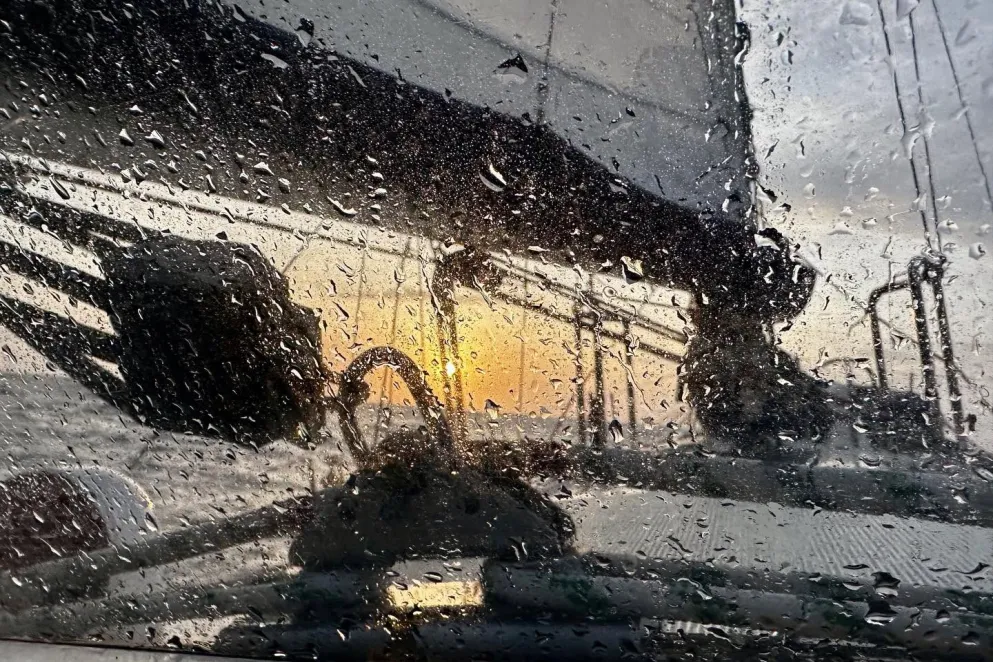
This year, the fleet faced calms, gale-force winds, fog, choppy seas, heavy rain, and sunshine. While some crews aimed for a hard-fought contest, others were simply intent on finishing.
"Everyone is helping everyone to get around the country,” said one of the winners. “You become a team, and you certainly make friends for life."
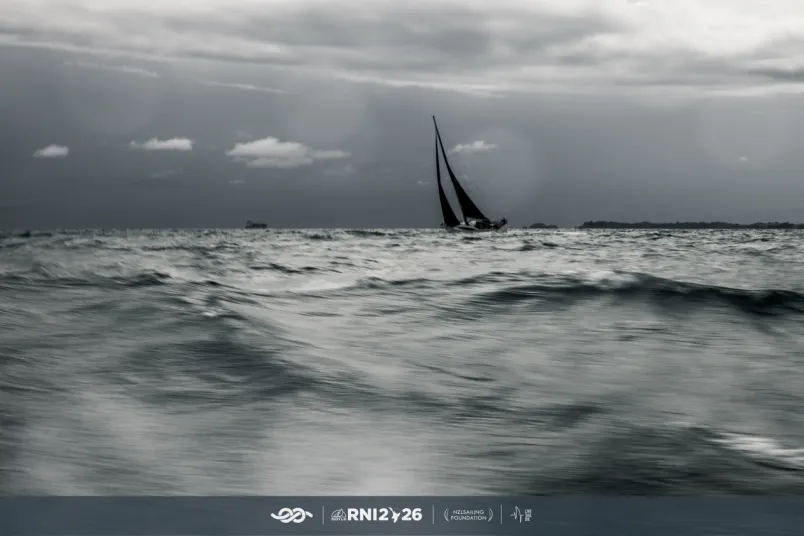
This year's race was characterised by several weather transitions, making life tough for competitors and race officials. Photos / Live Sail Die
Race officer Geoff Herd, stepping up from safety officer just months before the event, described the challenge of managing a race with relentless weather transitions instead of a single defining system.
"We weren't staring down the barrel of fronts coming through with gale force conditions," he said, "but there were a lot more weather transitions, which I think made it a lot harder for the competitors. Legs two, three and four all required ‘what-if’ conversations among the committee before we confirmed start times."
For Ragnar, the approach paid off. Elliott and Glidden finished second on all but one leg, securing the Overall PHRF prize — a remarkable achievement for a crew brought together at the last minute.
"It's very rare to see such consistency of a boat across all conditions, especially for a duo that came together really late in the piece," said Jolliffe. For Elliott, the win carried extra meaning: his father had won the overall in 1989.
The Line Overall prize, for the shortest elapsed time, went to Jesse Turner and Will Goodfellow on Explore Racing, while Josh Tucker and Damon Jolliffe on Motorboat III won Division One and the overall PHRF points trophy. For seasoned competitors like Tucker and Jolliffe, who have completed the RNI 11 times between them, variable conditions demand preparation and adaptability.
"Getting to the start line is always the hard part. Once you’re at the start line, all you have to do is go sailing," said Tucker. Damon Jolliffe added, "Everyone thinks the more you do it, the easier it is. Actually, it's harder, because the more you realise you’ve got to do."
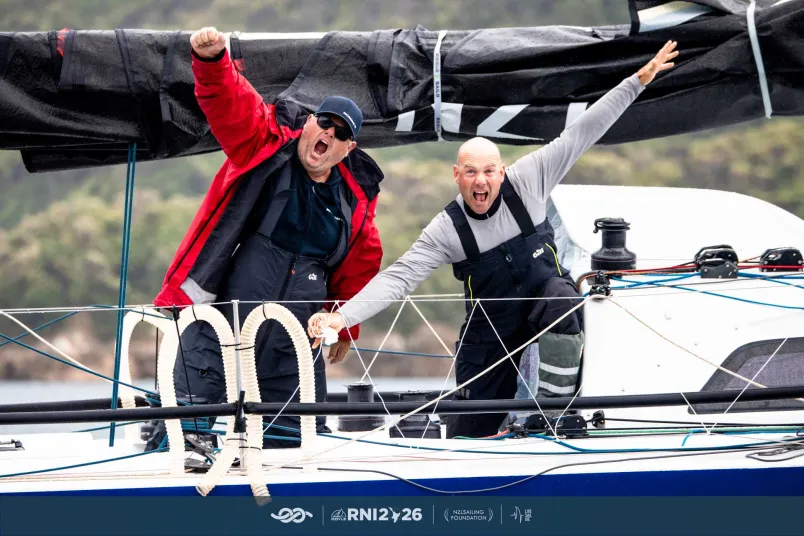
Josh Tucker and Damon Jolliffe on Motorboat III won Division One and the overall PHRF points trophy. Photos / Live Sail Die
Mid-fleet stories were equally compelling. Ryan McCready and Andrew Child, on Physical Favours, inherited a boat from McCready’s late godfather with one condition: do this race. After rounding the top of New Zealand, a broken anchor lashing damaged the main bulkhead, yet they repaired it and completed the leg — and the race.
"For them to turn around, go back, anchor up, effect repairs, and then complete the leg and complete the whole race," said Herd. "I think that’s a pretty awesome thing to do."
Other crews showed similar perseverance: Hotdogger (Nigel Bish and Sin Grujicic) finished leg two with a broken D1 stay holding the mast together, while Highline (Andrew MacMurdie and Jen Haliday) demonstrated remarkable endurance.
At the front, Explore Racing was blistering on legs one and three, while Motorboat III won three legs but missed the overall major prize — Garry Jolliffe described it as "both mathematically possible and emotionally brutal".
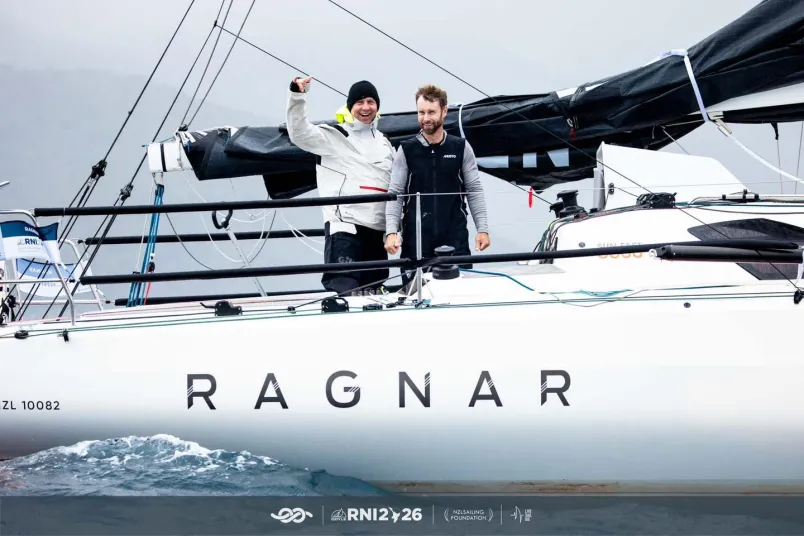
Ragnar's Brett Elliott and James Glidden. Photos / Live Sail Die
Preparation is key, as Elliott and Glidden know. Their late start didn’t stop them from achieving peak performance, while Tucker and Damon Jolliffe undertook months of modifications to Motorboat III, including new sails, rigging, foot chocks, and internal systems.
The race also highlights the volunteer backbone of offshore sailing. Doyle Sails travelled with the fleet, repairing sails at every stopover and transforming the Napier Sailing Club into a makeshift sail loft.
“It doesn’t really matter what stickers are on your sail when you get into port,” said Garry Jolliffe. “The Doyle team were there to help.”
Inspiring the next generation, Sharon Ferris-Choat from Vixen Racing spoke to junior sailors at Queen Charlotte Yacht Club, where 15 aspiring sailors toured race boats. With young talent like Ben Roff on Kick and Lydia Boyd on Carpe Diem, the pipeline of offshore sailors remains strong.
For those willing to brave New Zealand’s coastal waters, the next “lap” of the North Island is scheduled for 2029.
For Brett Elliott and James Glidden, Ragnar proved that even a last-minute crew, when paired with skill and determination, can write their own offshore legend.
Related news
It’s been an action-packed month for our NZCT regional development managers around the country, with Yachting New Zealand’s ongoing membership model and affiliation fee structure review roadshow keeping the team busy.
New legislation requiring everyone on recreational craft of six metres or less to wear a properly fitted lifejacket while underway will be in place ahead of the peak summer boating season.
In the first episode of Yarns with Yachties, a new collaborative series from Yachting New Zealand and Live Sail Die, we caught up with Andrew McFarlane at the Nautilus Braids factory in Rolleston, just outside Christchurch.